Speculation

First of all, speculative fiction, what is it?

This blog, What is Speculative Fiction, goes into more detail, but I understand spec-fic to be a kind of cross-over or middle ground between the following:

  • Alternate histories
  • Science ficiton
  • Dystopian fiction
  • Fantasy (ish)
  • Horror
  • Post Apocalypic

It’s that middle ground between hard core Sci Fi and a character-driven story, that place where reality seems normal enough until you realise it isn’t. It’s where the reader is challenged to think, what if the world had taken a different course, what if things were not as they appeared? In conversations with readers and fellow writers alike, I often hear people saying you can’t mix Sci Fi with romance or you can’t mix fantasy with literary fiction (well, what about magical realism, for a start?). This is an assumption which is lacking in imagination.

For readers who like to see traditional genres turned on their heads, or who like to journey further into imaginary worlds, there’s speculative fiction.

Literary speculative fiction titles

Literary fiction and speculative fiction venn diagramThis excellent blog about novels which straddle the fence between literary fiction and speculative fiction goes into more detail about how this is done. It lists a whole host of well known ‘literary’ works which could be considered ‘speculative’, but some of my favourites in this area are:

  • Never Let Me Go, Kazuo Ishiguro
  • The Handmaid’s Tale, Margaret Atwood
  • 1Q84, Haruki Murakami
  • The Road, Cormac McCarthy

Speculative fiction to try out

Aside from my Borderliners trilogy, the first book of which will be out in the new year, there is a wealth of speculative fiction out there. If you’re interested in this mixed genre approach to fiction, why not look at this comprehensive 2013 list of speculative fiction titles to try? I particularly like the following suggestions:

  • In Search of and Others, Will Ludwigsen
  • Anything by Aldous Huxley
  • Cloud Atlas, David Mitchell

Happy holiday reading!

1 Comment

Filed under Novel writing

Physician, heal thyself

psychiatrist couchOn a recent holiday, I came across a doctor who had a persistent cough, much worse than that of any of the others in the group. I wondered why this was. Surely, a doctor should be able to cook himself up a decent cold/cough remedy?

Then I was reminded of the phrase ‘Physician, heal thyself’:

And he said unto them, Ye will surely say unto me this proverb, Physician, heal thyself: whatsoever we have heard done in Capernaum, do also here in thy country.

Luke 4:23

Ain’t that the truth? And in my book, this is what happens too. My protagonist, Elena, is a psychotherapist. Surely she should be one of the strongest people around, mentally and physically? Maybe. But why do we assume this of medical professionals? Why should they be the strongest?

I once went to a talk given by the chairman of national body of psychiatrists who said more than one in four of us would suffer from mental ill health at some point in our lives. Probably more like one in three. He then went on to say that he contributed to this statistic. He, too, suffered from mental ill health. The audience was surprised. Nobody expected the leader of such a high profile organisation to say that he suffered from mental ill health just as his patients did, and yet I wonder why it was a surprise.

Mental ill health still carries with it a huge stigma, so much so that people tell me my protagonist should not suffer from it. A protagonist needs to be strong, they cry. And yet what does this mean?

Are you strong if life is easy and you never fall ill? Or are you strong if you suffer and yet, after a fashion, prevail?

This is why my protagonist is not a clear-cut character. She has issues, and there are things she needs to do in order to overcome them.

Leave a comment

Filed under Novel writing

Guest Blog from Russell Galen: Meta-Series

Wise words from Russell Galen.

Clarion Blog

It’s an ill wind that blows nobody any good.  Who has benefited from the typhoons and twisters of the last few years in publishing?

Series authors are one example. Series are among the few types of fiction that have actually sold better since the big downturn that began in 2008.

Series aren’t affected by the trends of the moment. Readers become so invested in the growth of a character that they feel compelled to keep track, “marrying” the character, integrating him or her into their own ever-changing lives. Just as in a real marriage which is for better or for worse, we stay loyal to that character. If a financial crisis forces us to cut down on book purchases, we’re not going to skip or delay reading about a character who is part of our lives.

I’ve also seen a benefit to authors whose books emerge from their personal history…

View original post 494 more words

Leave a comment

Filed under Novel writing

Protagonist as observer

A protagonist must always have special powers, something which makes them stand out from the rest.

In the Millennium trilogy, Lisbeth Salander not only has superhuman hacking capabilities and acute intelligence, she is formidable in hand to hand combat. Gillian Flynn’s Amy, in Gone Girl, is more manipulative than most. She has some kind of personality disorder – an extremely destructive one – and the ability to wield it as a weapon.

The observer

Like the observers of Fringe, my protagonist, Elena, has the ability to see across timelines. She experiences premonitions and she experiences events from the past, both in her dreams and her waking life as she moves through the Borderliners trilogy. Of course, the reader is always free to form their own opinions of her capabilities. Some might see her as psychic. Some might see her as psychotic, someone who sees and hears things which aren’t there. Others, as merely delusional. Others still, may see her as merely human, someone who has the same capabilities as anyone else, if only we decided to pay attention to what was going on around us.

It is up to the reader to decide what is really going on.

In Fringe, the observers are definitely not of this world. They look and behave strangely. They know of their purpose in life and accept it. They are neither good nor evil.

Elena, on the other hand, must decide. As she moves through life and the strangeness of events surrounding her catch up, what will she make of this? Will she move her consciousness up a level? Or will she descend into a pit of delusion?

Leave a comment

Filed under Novel writing

Quantum tectonic event

Split SymmetryWhat if a quantum tectonic event split our reality?

So that different versions of ourselves appeared from an alternate universe, to show us what our lives could have been had we made different choices, or what we might become, should we change our behaviour right now?

As Werner Heisenberg said,

‘Atoms or elementary particles themselves are not real; they form a world of potentialities or possibilities rather than one of things or facts.’

What if our lives were made up of infinite possibilities, all of which were happening simultaneously, until the observer – you – decided to pin one down? One choice, one life.

Look out for Split Symmetry*, which explores all of these questions – and more – against the exciting backdrop of a mysterious Italian mountain range, a group of friends who become embroiled in the worst earthquake the region has known and a quantum event, which changes their lives for ever. The question is, does it only alter the world for them?

*out late next year or in early 2015

Leave a comment

Filed under Novel writing

How to write a great thriller

Spooky book interiorToday I revisited some blogs I read a while ago about thriller-writing. One of my favourites is the 10 Basic Ingredients of a Successful Thriller. The author of this blog lists some simple but crucial elements to put into a cracking good thriller.

1. You need to have a good story
2. Write about the underdog
3. Multiple points of view
4. Open your book with an action
5. Early on, make clear what your protagonist wants and what he fears
6. Make your characters miserable
7. Your main characters have to change
8. Pacing must be high: Strong Narrative
9. Show—don’t tell
10. Teach us something.

Whilst these points seem simple, it’s harder to pull off effectively. Some authors do a fantastic job. Gillian Flynn does multiple points of view and unreliable narrators to perfection, the literary equivalent of close camera angles which switch between protagonists to unravel a jigsaw only the reader has all the pieces for.

Ian McEwan, on the other hand, is the king of the initial action scene. Think of the Balloon scene in Enduring Love. I can still remember opening it up in a coffee shop one day, expecting to read a few pages over a coffee and ending up late for the next appointment I had as I couldn’t put the book down. The first chapter was so all-consuming, I came out in a cold sweat.

Characters have to be miserable or there will be nowhere for them to go during the course of the novel. Sometimes they go to a worse place, sometimes a better one, but they have to change and develop. In SJ Watson’s Before I go to Sleep, Christine is in dire straits from the start, something which hooks the reader from the very first page.

Pacing. Not everyone does this well. I’m not a great fan of superficially fast-paced books which never provide any let up or back story for the reader to fall back into now and again. But many people will just discard a book which provides ‘breathers’ here and there. One thing is for sure, the critical plot points must be fast paced – the opening scene, the inciting incident, the rock bottom stage and climactic event. And underlying tension must run through all scenes, no matter how much exposition or flashback they involve. I think Stieg Larsson did this well in the Millennium Trilogy.

Finally, the reader must learn something? Maybe. I’m not sure I agree but many people believe this. This is one of the reasons Dan Brown did so well!


Leave a comment

Filed under Novel writing

Charismatic leaders

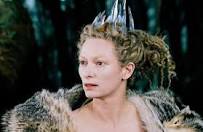
White witchOne theme which interests me in literature is the power of the charismatic leader. Scratch the surface, and often you find an extremely powerful and dangerous individual who has a potent and toxic influence on those around them. How does a person become so charming within their chosen social circles or community that eventually they become revered, a status which gives them licence to commit all kinds of wrongdoing on the unsuspecting people around them?

Among the ‘villains’ listed in the Telegraph article, the 50 greatest villains in literature, my favourites are:

  • The White Witch from The Lion, the Witch and the Wardrobe by C S Lewis
  • Voldemort from the Harry Potter series by JK Rowling
  • Iago from Othello, by William Shakespeare
  • O’Brien from Nineteen Eighty-Four, by George Orwell
  • Fred from The Handmaid’s Tale, by Margaret Atwood

My forthcoming book, Borderliners, looks at the influence a charismatic leader has on her community, and how she succeeds in hoodwinking large numbers of people – with disastrous consequences.

Psychological traits of cult leaders

In his article about cult leadersJoe Navarro, a former FBI Counterintelligence Agent, says the following:

They demanded perfect loyalty from followers, they overvalued themselves and devalued those around them, they were intolerant of criticism, and above all they did not like being questioned or challenged. And yet, in spite of these less than charming traits, they had no trouble attracting those who were willing to overlook these features.

Often, those who decide to ‘follow’ such people can suffer a range of psychological ill effects, including mental breakdown, and the idea of a vulnerable person who treads a precarious borderline between reality and illusion, health and mental breakdown is central to my novel.

Charisma

Max Weber, a German sociologist and philosopher best known for best known for his thesis combining economic sociology and the sociology of religion, defined charismatic authority as:

The external or internal rule over man made possible by the faith of the ruled in this supernatural power of the leader.

Such leaders tend to be:
These characteristics are:
1) Self-confidence and self assurance
2) Need for power and low authoritarianism
3) Expert power
4) Referent power
5) Communications and rhetorical skills
6) Assertive, dynamic, outgoing, and forceful

I’m particularly interested in the article’s statement that they often arise because of ‘cultural unrest’ which leads to a situation in which followers think of the charismatic leaders ‘as “prophets” or “saints”’ who will provide them with a route to salvation.

This would certainly be true of my very own villain, and she is hopefully not somebody I will ever come across in a dark alleyway.

Leave a comment

Filed under Novel writing

My top five thrillers and spooky novels

spooky moonBorderliners, the first novel in my trilogy, is a psychological thriller set in the autumn of several different timelines.

As I prepare this novel for publication at the end of 2013, some of the key themes of the story are uppermost in my mind: dreams and reality, the mysterious nature of time, ambiguity of human relationships and the destructive nature of isolation and the vulnerability it brings to its subjects.

Inspiration for some of my themes comes from my love of thrillers and some of my favourites are listed here:

  1. The Master and Margarita, Mikhail Bulgakov
  2. Dark Places, Gillian Flynn
  3. The Secret History, Donna Tartt
  4. Blackwater, Kerstin Eckmann
  5. The Landscape of Love, Sally Beauman

For me, Gillian Flynn is the current queen of the plot-driven suspense thriller, but almost nothing beats the way I felt when I first read Donna Tartt’s ‘The Secret History’ over a decade ago. I was a student at the time and spent several days and nights immersed in the story. Kerstin Eckmann’s Blackwater is one of a longer list of nordic thrillers I’m very fond of, but the one which stands the test of time in my memory. The Landscape of Love is a peculiar novel, which I found both disturbing and compulsive at the same time. The use of changing points of view from the reliable to the unreliable narrators was one which I loved and has followed through to my own work. Finally, The Master and Margarita contains a masterpiece of a scene where Margarita, the Master’s mistress, is invited to a ‘Walpurgis Night ball’ , an event associated with the occult and the supernatural.

Happy reading!

Leave a comment

Filed under Novel writing

Being an agent is about reading between the lines

An interesting and pertinent blog post about how agents choose projects they think have potential and how much collaboration they are prepared to do with a writer. As with everything, a writer should finish a project to the best of their ability but then a lot of what happens next can be quite subjective and can depend on which agents they target, what their tastes are and where they are in their career.

Common sense is probably a sensible policy for writers to employ. I’m currently looking for an agent for book two of my trilogy, Split Symmetry, and I found this an interesting and heartening post to read at this point in time.

Being an agent is about reading between the lines.

Leave a comment

Filed under Novel writing

Dirty drafting

my writing deskAre you a ‘dirty drafter’ or a detailed planner?

I’ve decided I’m the former even though I would dearly love to be the latter. Given the plot driven nature of my stories, I really should be a planner, but I kind of wing it a bit.

Why? Well, the answer is simple. I love the feeling that the manuscript is becoming something more than you planned. It’s almost like giving birth, albeit a lot less painful (physically, at least). You imagine what you might be making/have made, but it ends up an entity of its own. When characters become that little bit darker than you wanted, or you wake up in the middle of the night and realise they have to do something completely unexpected. That’s the feeling I’m after.

#Nanowrimo

So as the countdown to National Novel Writing Month begins – now T-9 to lift off (or write off) – I’m reminded of why I like to bash down as many words as possible in the first instance. Just as the author of this article about drafting suggests, the more you write, the more you want to find out what happens next.

Compass

Of course, I’ll never go back to the dark days of no planning whatsoever. I’ve learned over the course of the last three years and two manuscripts, that you need a compass. Stephen King calls it his ‘what if?’ question, which is, as I understand it, a kind of ‘mashup’ of two or three ideas or events which make an entirely new entity you can use to kick off your novel concept. Faber Academy and other creative writing courses like to you get an elevator pitch down before you start – theory goes, if you can’t get the basic concept into one of these 25 word pitches, it won’t fly. This is probably true, by the way. But great long reams of planning charts and characterisation cards? No, this is not for me.

2 Comments

Filed under Novel writing